
Many people casually refer to a distribution box as “just a box,” but in reality, it is one of the most critical components of any electrical system. When someone says they are checking the distribution box, they usually mean the complete wall-mounted enclosure that contains the distribution board and all protective devices inside. In modern homes, commercial buildings, and industrial facilities, distribution boxes play a vital role in ensuring electricity is delivered safely, efficiently, and reliably.
Electrical systems are an essential part of daily life, powering everything from lighting and appliances to industrial machinery and automation systems. Understanding what a distribution box is, how it works, and why it matters is key to maintaining electrical safety and system stability.
What Is a Distribution Box?
A distribution box, commonly known as a DB box, is a central electrical enclosure used to distribute electrical power from a single incoming source to multiple outgoing circuits. Inside the box, electrical energy is divided and routed to different areas or equipment through protective and control components such as circuit breakers, residual current devices, fuses, and busbars.
Whether installed in residential buildings, offices, factories, or public facilities, a distribution box ensures that electricity is delivered in an organized and controlled manner. It protects both the electrical system and connected equipment from faults such as short circuits, overloads, and leakage currents.
The primary purpose of a distribution box is safety and management. By housing critical electrical components in a protected enclosure, it reduces the risk of electrical accidents, simplifies maintenance, and improves system reliability.
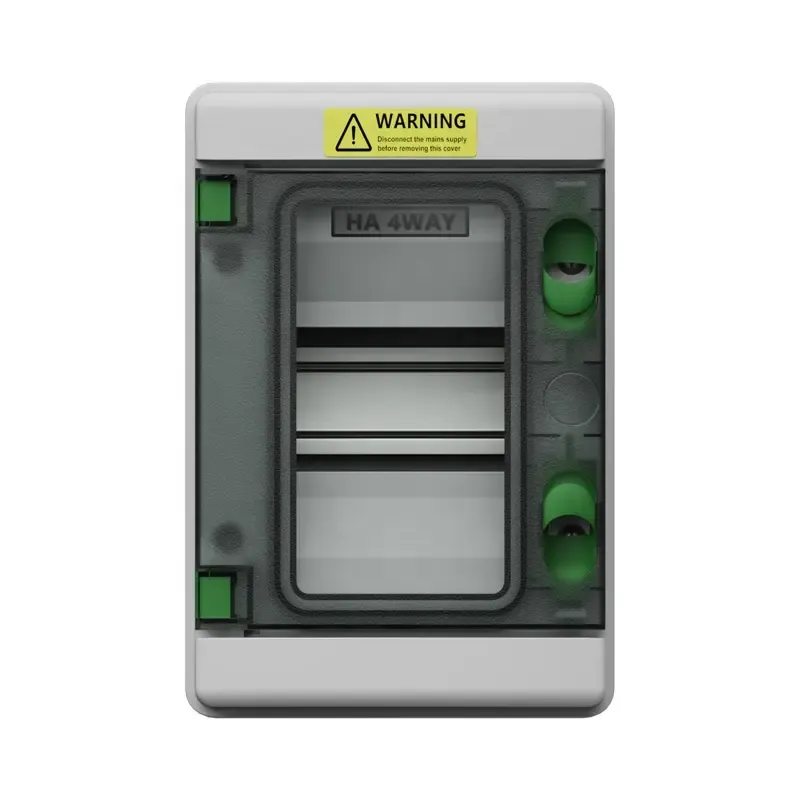
Main Components of a Distribution Box
Outer Enclosure Structure
The outer enclosure is the physical shell of the distribution box and serves as the first line of protection. It provides mechanical support, insulation, and isolation for internal electrical components.
The box body is typically made of metal or high-strength insulating materials and includes an internal mounting plate for installing electrical devices. Cable entry and exit points are positioned on multiple sides to allow flexible wiring.
The front cover or door is designed to protect internal components while allowing operation and inspection. Many designs include a transparent viewing window, enabling users to check switch status without opening the box. Circuit identification labels are usually placed inside the door to clearly indicate the function of each circuit.
Mounting brackets or lugs allow the distribution box to be installed on walls or embedded into structures. Knockout holes are pre-formed openings that can be easily removed to accommodate cables and conduits, making installation more convenient and adaptable.
Internal Electrical Components
The main circuit breaker acts as the master control switch for the entire distribution box. When turned off, it disconnects power to all outgoing circuits, allowing safe maintenance or emergency shutdown. This breaker typically has the highest current rating and is installed at the incoming power point.
Branch circuit breakers protect individual circuits. Each outgoing line has its own breaker that disconnects power in the event of overload or short circuit. Miniature circuit breakers are commonly used for residential and commercial applications due to their reliability and compact size.
Residual current devices monitor leakage current and provide essential protection against electric shock and fire. When leakage exceeds a safe threshold, the device cuts off power almost instantly, significantly reducing safety risks.
Surge protection devices protect electrical equipment from sudden voltage spikes caused by lightning strikes or power grid switching. By diverting excessive voltage to ground, they help prevent damage to sensitive appliances and electronic systems.
Conductors and Connection Systems
DIN rails are standardized mounting rails used to securely install modular electrical components such as circuit breakers and RCDs. They allow for neat arrangement and easy replacement of devices.
Busbars provide centralized electrical connections. The neutral busbar collects all neutral conductors from branch circuits, while the grounding busbar connects all protective earth wires, ensuring proper grounding of the system.
Internal wiring connects all components within the distribution box and is carefully insulated to maintain electrical safety and operational stability.
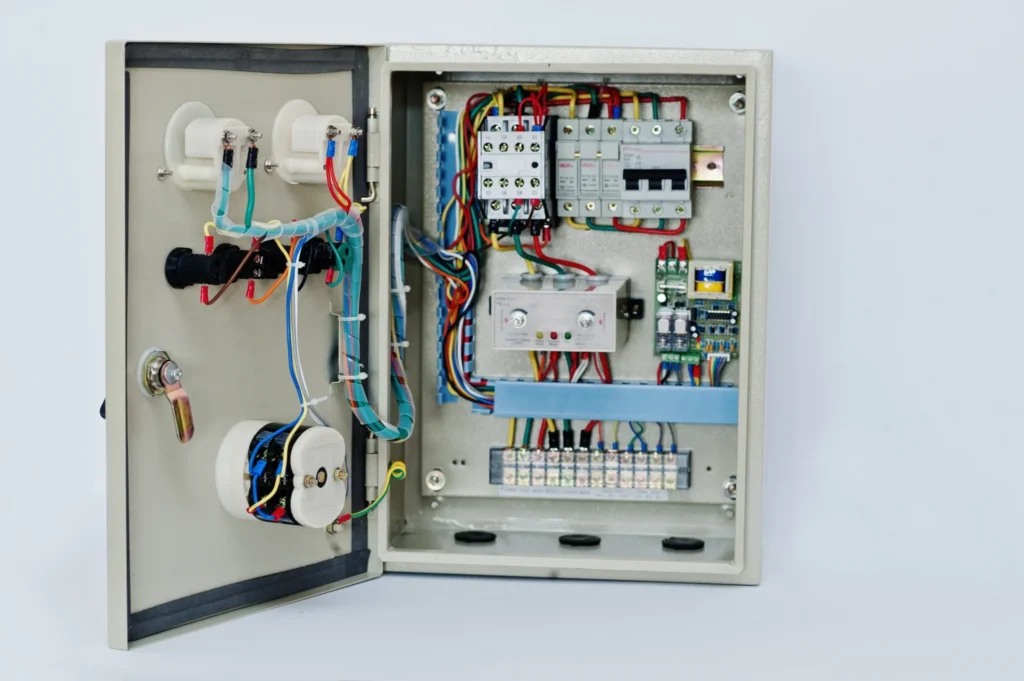
Types of Distribution Boxes
Classification by Voltage Level
Low-voltage distribution boxes operate at voltages up to 1000V AC and are the most commonly used type in residential, commercial, and industrial systems.
High-voltage distribution boxes and cabinets operate at voltages of 10kV and above and are typically used in power substations and large industrial installations.
Classification by Application and Function
Main distribution boxes receive power directly from transformers or utility grids and provide overall control and protection for entire buildings or facilities. They are usually installed in main electrical rooms and feature high-capacity breakers and metering devices.
Sub-distribution boxes distribute power from the main box to specific areas or floors. They serve as intermediate control points and manage regional electrical loads.
Terminal distribution boxes supply power directly to end-use equipment and are commonly found in residential units, offices, and workshops. They are the most frequently encountered type in everyday applications.
Lighting distribution boxes are dedicated to lighting circuits only, ensuring stable and controlled operation of lighting systems.
Power distribution boxes are designed for motors, pumps, fans, and other power-driven equipment. They often include contactors, thermal overload relays, and high-capacity breakers.
Control boxes focus on automation and process control rather than simple power distribution. They may include PLCs, relays, frequency converters, and control interfaces.
Metering boxes are primarily used to house electricity meters for monitoring energy consumption in specific zones or by individual users.
Classification by Installation Method
Surface-mounted distribution boxes are installed directly on walls and are easy to install, though they occupy more visible space.
Concealed distribution boxes are embedded into walls, offering a cleaner appearance and space-saving design. They are widely used in modern residential and commercial buildings.
Classification by Enclosure Material
Metal distribution boxes, made from steel or stainless steel, provide high mechanical strength, excellent heat dissipation, and strong protection. They are commonly used in industrial and outdoor environments.
Plastic distribution boxes, typically made from ABS or polycarbonate, offer good insulation and corrosion resistance and are ideal for dry indoor applications.
Classification by Protection Rating
Protection ratings define the box’s resistance to dust and water. Standard indoor models are suitable for dry environments, while splash-proof and waterproof enclosures are designed for humid, dusty, or outdoor conditions. High-protection models such as IP65 and above are fully dustproof and water-resistant, making them suitable for harsh industrial and outdoor environments.
Special Types of Distribution Boxes
Explosion-proof distribution boxes are used in hazardous locations where flammable gases or dust are present. Their robust enclosures prevent internal sparks from igniting the surrounding environment.
Outdoor distribution boxes are designed to withstand rain, dust, UV radiation, and temperature extremes.
Intelligent distribution boxes integrate monitoring and communication technologies, allowing real-time measurement of electrical parameters and remote system management. They are widely used in smart buildings and smart grid applications.
Main Functions of a Distribution Box
A distribution box safely distributes electrical power to multiple circuits while providing protection against overloads, short circuits, and leakage. It helps protect electrical equipment, improves system organization, and simplifies maintenance and monitoring.
Applications of Distribution Boxes
In residential buildings, distribution boxes manage lighting, sockets, air conditioning, and dedicated appliance circuits. In commercial buildings, they support lighting, power systems, emergency circuits, and equipment operation. In factories and workshops, distribution boxes serve as control centers for production equipment and automation systems. Public facilities and outdoor installations rely on high-protection distribution boxes for reliable operation under harsh conditions.
Maintenance and System Expansion
Regular inspection of distribution boxes is essential to identify loose connections, aging wires, or damaged components. Faulty parts should be replaced promptly to maintain safety and system reliability. When electrical demand increases, distribution boxes can be upgraded or expanded to accommodate additional circuits and equipment.
Importance of Proper Distribution Box Design in Electrical Systems
The design of a distribution box has a significant impact on the safety, efficiency, and long-term reliability of an electrical system. A well-designed distribution box provides sufficient spacing between internal components, allows proper ventilation for heat dissipation, and ensures clear identification of circuits. Poor design can result in overheating, difficult maintenance, and a higher risk of electrical failures. For this reason, modern distribution boxes are manufactured according to strict engineering standards to ensure safe and stable operation in residential, commercial, and industrial environments.
Safety Standards and Certifications for Distribution Boxes
Distribution boxes must comply with recognized international electrical safety standards to ensure reliable performance and user protection. Common certifications include IEC, EN, and UL, which define requirements for electrical insulation, mechanical strength, protection ratings, and fire resistance. Using certified distribution boxes ensures that both the enclosure and internal components can withstand electrical stress, environmental conditions, and long-term operation without compromising safety.
Load Calculation and Circuit Planning in Distribution Boxes
Accurate load calculation is essential when designing or selecting a distribution box. Each circuit must be properly rated based on the connected electrical load to prevent overloading and frequent circuit breaker tripping. Proper circuit planning also helps achieve balanced load distribution, especially in three-phase systems, which improves efficiency and reduces stress on electrical components. A well-planned distribution box allows for easier system expansion and supports future increases in power demand without requiring major modifications.
Distribution boxes are fundamental to safe and efficient electrical power distribution. They protect electrical systems, improve energy management, and ensure stable operation across residential, commercial, and industrial applications. Choosing the right type of distribution box and maintaining it properly is essential for long-term electrical safety and performance.
QJC Electric offers a wide range of waterproof distribution boxes, including HA and HT series, designed for demanding environments requiring high levels of protection against water, dust, and corrosion. For more information about QJC distribution box solutions, please visit the product page or contact us directly.