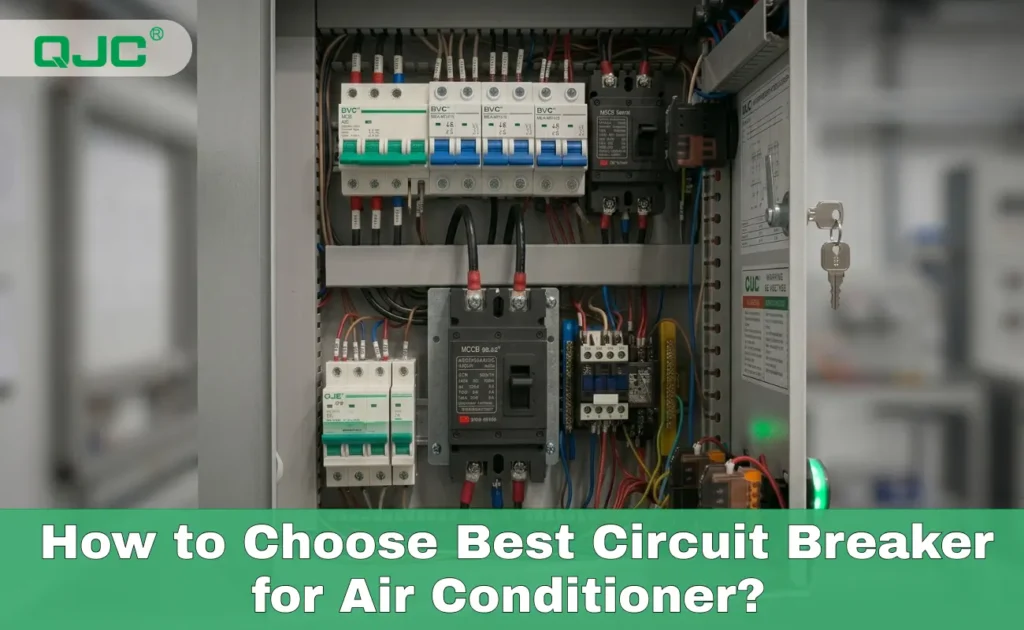
Selecting the best circuit breaker for air conditioner equipment is not a minor detail in a commercial HVAC project. It allows the unit to start and keep running normally without unwanted trips, especially when the compressor draws a high starting current. A suitable breaker should be chosen around the compressor load, cable size, installation conditions, starting current and relevant protection standard. In larger HVAC systems, reliable protection comes from proper technical matching, not simply choosing a convenient ampere rating on the panel.
What Is the Circuit Breaker for an Air Conditioner?
An air conditioner breaker is a calibrated safety device, not a simple switch. It disconnects supply when the current rises beyond what the cable, compressor, or panel can safely carry.
The best circuit breaker for air conditioner use allows normal compressor inrush current to pass without nuisance tripping but still reacts to real overloads and short circuits.
Read More: How to choose a device used to protect an electrical circuit?
How to Choose the Best Circuit Breaker for Air Conditioner Installations?
- Load Current Check: Start with the air conditioner’s full-load current, not the cooling capacity alone, because two units with the same BTU rating can draw different running currents.
- Starting Behavior: Choose the best circuit breaker for air conditioner installations by allowing for compressor starting surge, especially where frequent cycling or high ambient temperature increases electrical stress.
- Cable Coordination: Match the breaker rating with conductor size, insulation temperature, and installation method so the cable is protected before heat damage begins.
- Trip Curve Selection: Use a curve that tolerates motor start-up without ignoring real overloads, as weak selection causes nuisance tripping or delayed isolation.
- HVAC Compliance: Strong HVAC circuit protection needs proper short-circuit capacity, panel coordination, and safe disconnection under fault current.
- Commercial Suitability: A HACR rated circuit breaker is often preferred where compressors, fans, and refrigeration motors operate together under heavy-duty conditions.
Read More: How to Choose the Correct Circuit Breaker for Your Project?
The Unique Electrical Demands of Commercial Air Conditioning Units:
- Starting Current Reality: A commercial compressor does not start gently; it pulls a sharp current surge first, then drops to its normal running current after the motor reaches speed.
- Trip Timing: The breaker has to recognize the difference between healthy compressor start-up and a real fault, such as locked rotor, cable damage, or insulation breakdown.
- Combined Loads: One unit may feed compressors, condenser fans, evaporator motors, crankcase heaters, and control transformers, so the panel sees more than one electrical behavior at once.
- Outdoor Conditions: An air conditioner circuit breaker outside can run hotter than expected when fitted in a sun-exposed enclosure, especially with poor ventilation or tight panel spacing.
- Motor Protection Need: A Motor protection circuit breaker helps when the design needs adjustable overload protection, cleaner motor coordination, and better response to phase imbalance.
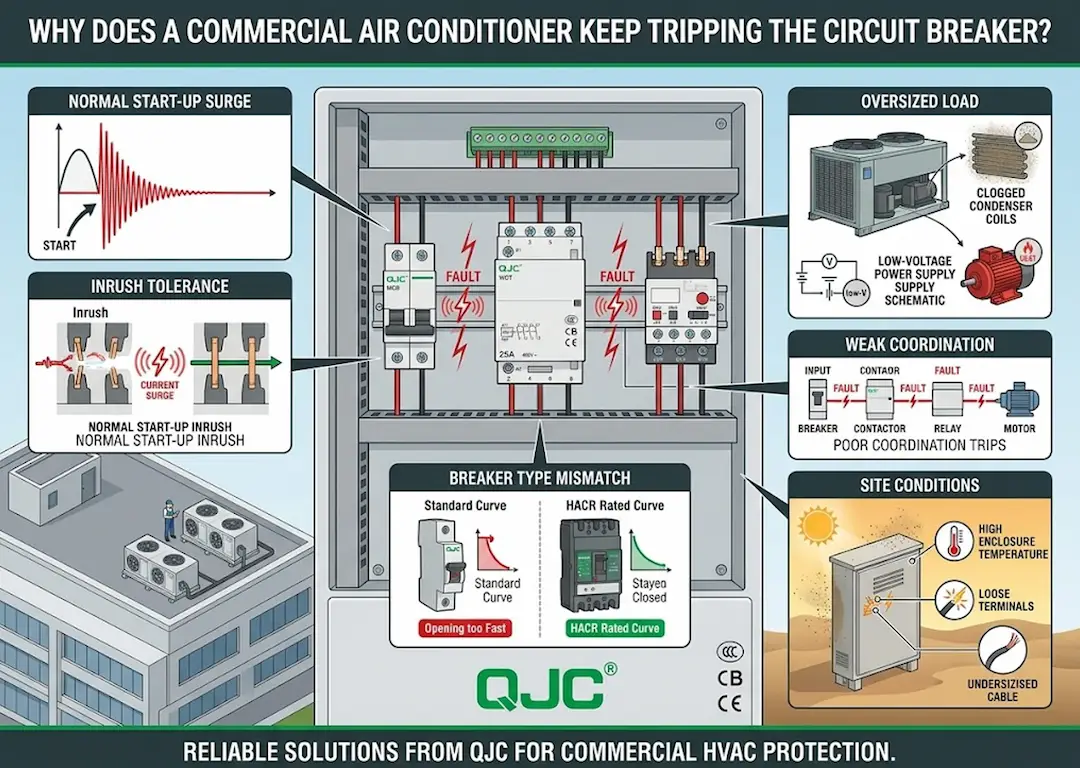
Why Does a Commercial Air Conditioner Keep Tripping the Circuit Breaker?
- Normal Start-Up Surge: A compressor can demand a short, sharp current rise before the motor reaches speed, so one trip at start-up may point to poorly matched protection, not always a failed unit.
- Inrush Tolerance: The best circuit breaker for air conditioner use must ride through healthy Compressor inrush current while still opening during a locked rotor or winding fault.
- Oversized Load: Added fans, dirty coils, low voltage, or mechanical drag can push running current above the breaker’s thermal limit.
- Weak Coordination: A contactor, overload relay, and breaker with poor coordination can create repeated trips during compressor cycling.
- Breaker Type Mismatch: A standard breaker may react too quickly to motor starting behavior, while a HACR rated circuit breaker is selected for heating, air-conditioning, and refrigeration duty.
- Site Conditions: High enclosure temperature, loose terminals, undersized cable or high fault levels can make a normal load behave like a dangerous one.
Managing High Inrush Currents with Type C and Type D MCBs:
Choosing between Type C and Type D is not about the letter only; it is about how the compressor starts, how long the surge lasts, and how safely the circuit clears a fault. These points show what really matters in the selection:
- Start-Up Reality: A compressor can pull a sharp current surge before rotor speed builds and back EMF rises; this moment is normal, but the breaker must understand it.
- Type C Selection: Type C is usually used with moderate motor starting current, such as smaller compressors, fans or mixed HVAC loads; electrically, it trips instantly at about 5 to 10 times the breaker’s rated current.
- Type D Selection: Type D is chosen only when the measured start-up surge is higher, as it trips at about 10 to 20 times the rated current, because extra tolerance without calculation can weaken fault protection.
- Inrush Control: A healthy compressor inrush current lasts briefly while the locked rotor current continues; the protection design must separate those two cases.
- Motor-Level Adjustment: A motor protection circuit breaker is important when overload protection, phase imbalance, and frequent start-stop operation need better control. It helps protect air conditioner compressors and HVAC motors from unwanted trips, overheating, and performance problems over time.
Read More: Which Brand MCB Is Best? Standards to Select.
Matching Breaker Amperage to Heavy Duty Cooling System Loads:
Breaker amperage is not determined by the AC tonnage alone. It has to make sense with the compressor data, cable capacity, heat around the panel, and the fault current the breaker may need to clear:
- Nameplate Reading: Start with MCA and MOCP, because they show the minimum circuit capacity and the maximum allowed protective device for that HVAC unit.
- Running Load Reality: Check compressor FLA, condenser fan current, control transformer load and crankcase heater demand before deciding the final breaker rating.
- Cable Protection: The breaker must protect the conductor, not only the machine; ampacity depends on insulation rating, ambient temperature, and installation conditions.
- Heat Derating: Grouped cables, warm plant rooms, and tight outdoor enclosures can reduce the safe current-carrying capacity.
- Fault Duty: The best circuit breaker for air conditioner loads must also have breaking capacity above the prospective short-circuit current at the panel.
Read More: Distribution Box (DB Box) : Complete Guide to Electrical Power Distribution and Protection.
Essential IEC Standards Governing HVAC Circuit Protection Equipment:
IEC standards matter because HVAC breakers are judged by breaking capacity, trip behaviour, voltage rating and safe disconnection, not by amperage alone. You’ll know the key details in the following points:
- IEC 60947-2: This standard is more suitable for commercial and industrial low-voltage circuit breakers used by skilled individuals in panels up to 1,000 V AC or 1,500 V DC.
- Industrial Use: Commercial HVAC panels usually need a breaker checked for breaking capacity, utilization conditions, rated voltage, and trip behavior, especially when compressors and fans start repeatedly.
- IEC 60898-1: This standard is more related to household and similar AC circuit breakers, with limits such as 440 V, 125 A, and 25 kA short-circuit capacity.
- Application Difference: The best circuit breaker for air conditioner equipment in heavy-duty projects is usually selected closer to IEC 60947-2 logic, not just domestic MCB assumptions.
- Fault Clearance: The breaker must interrupt the prospective short-circuit current at the HVAC panel; otherwise, the installation may look correctly rated while being unsafe under a real fault.
Read More: Which Company Circuit Breaker is Best for Projects?
How QJC Provides the Ultimate HVAC Circuit Protection?
Choosing protection for HVAC panels is easier when the supplier understands compressor loads, cable safety, fault current, and installation conditions together. These are the points that make the difference in real HVAC panels:
- Inside the Board: QJC covers the protection parts usually needed in low-voltage HVAC panels, including MCBs, RCBOs, RCCBs, SPD units and related devices, so the board is not built around one breaker only.
- For AC Loads: The best circuit breaker for air conditioner duty is chosen after checking current rating, pole number, trip curve, breaking capacity and the real starting behaviour of the compressor.
- Safety in Operation: Good protection helps reduce overheated cables, stressed terminals and sudden shutdowns when cooling circuits run for long hours.
- Contractor Use: HVAC contractors need ratings and multi-pole options that can fit different panel layouts without complicating installation.
- Application Matching: Reliable HVAC circuit protection still depends on cable size, compressor starting current, upstream devices and enclosure temperature.
Conclusion:
When an air-conditioning system works hard every day, the breaker behind it becomes part of system reliability, not a small accessory. The best circuit breaker for air conditioner projects should protect cables, tolerate compressor starting behavior, clear faults safely, and suit real panel conditions.
For contractors, distributors, and panel builders, dependable HVAC protection should support safety, consistency, and long-term daily cooling performance under demanding commercial loads and real site conditions.
For technical consultations or to request a quote for heavy-duty HVAC protection, visit our Contact Us page, message our engineering team directly on WhatsApp, or email us at info@qinjia-mcb.com.
FAQs:
What type of circuit breaker is best for a commercial air conditioner?
The best type depends on the compressor load, cable size, and starting current. Type C, Type D, MCCB, or motor protection breakers may be used in commercial HVAC panels.
What size circuit breaker is required for a commercial HVAC system?
Use the unit nameplate first, especially MCA and MOCP values. The size must also match the cable ampacity and available fault current.
Why does my air conditioner circuit breaker keep tripping during startup?
It often points to a breaker that is not suited to the operating conditions. The compressor inrush current may be too high for its trip curve or rating, and the problem can get worse with low voltage, loose terminals, undersized cable, or poor panel ventilation.





Leave a Reply