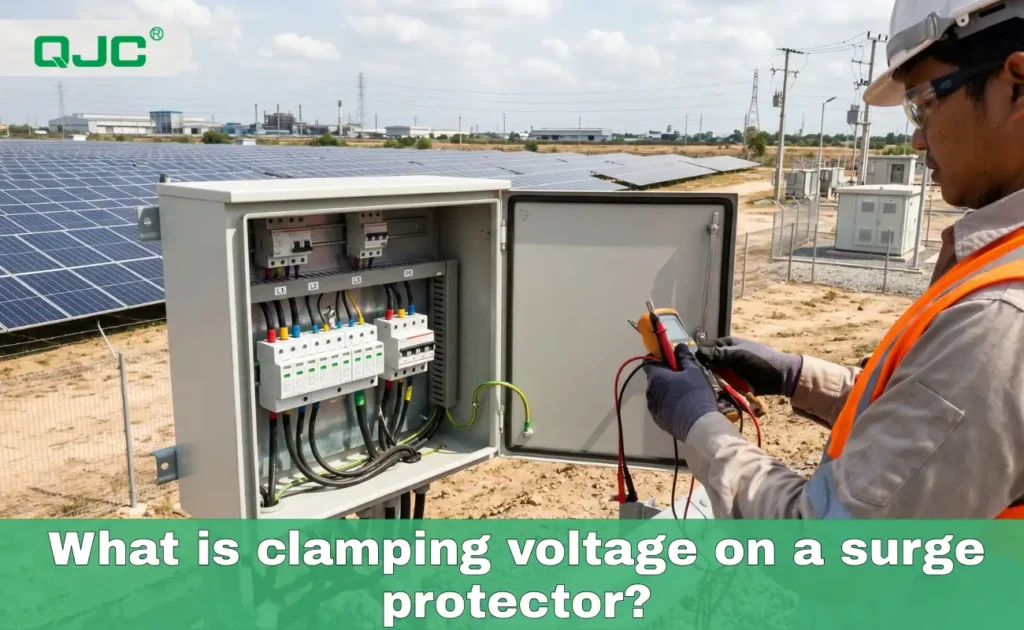
What is clamping voltage on a surge protector becomes important when electrical equipment is exposed to switching surges, lightning effects, or unstable supply conditions. In simple terms, it is the point where the device reacts and diverts the excess surge current away from the protected load (thereby limiting the voltage). The design depends on the internal voltage clamping circuit, the surge current rating, and whether the system is AC or DC. For contractors and bulk buyers, QJC offers practical surge protection choices for solar, construction, and industrial panels.
What Is Clamping Voltage on a Surge Protector?
What is clamping voltage on a surge protector means the voltage level where the device stops acting like a normal open path and starts limiting the surge. At that moment, the internal MOV or protection element diverts excess energy away from the load.
In engineering terms, it is not the voltage completely blocked by the device, but the specified let-through voltage that may still reach the equipment under defined test conditions. That is why buyers should compare clamping level, surge current rating, response time, AC/DC suitability, and panel application together.
How Does Clamping Voltage Activate to Protect Your Equipment?
Clamping voltage matters because it tells you when the surge protector actually steps in, instead of leaving the circuit to take the full hit, as you’ll see in the points below:
- Normal supply: The protector stays almost idle while the voltage is sitting where it should.
- A sudden spike: The problem starts when switching loads, nearby lightning, or an unstable supply pushes the voltage up very quickly.
- The trigger point: This is where what is clamping voltage on a surge protector becomes useful; the device begins holding the spike down before it reaches the equipment.
- A safer route: The surge is pushed away from the protected side, usually through the earthing path or internal protection route.
- Not zero voltage: The spike is not erased completely, but the remaining voltage must be at suitable values that fall below the equipment’s withstand rating.
- Real site check: Good selection depends on system voltage, earthing condition, cable length, surge current, and whether the protector is fitted on an AC or DC panel.
Why Lower Clamping Voltage Matters for Bulk Buyers?
Lower clamping voltage becomes a real buying point when the same SPD will be used across many panels, machines, or project sites, as you’ll know from the points below:
- Less stress on equipment: A low clamping voltage surge protector usually leaves a lower spike reaching inverters, meters, PLCs, drives, and control boards.
- Not just a cheap part: In bulk orders, a single incorrect choice of protection level can be replicated across dozens of panels, making the initial mistake very expensive to rectify later..
- Real meaning of the rating: When buyers ask what is clamping voltage on a surge protector, they are really asking how much voltage the equipment may still receive during a surge.
- Inside the device: The voltage clamping circuit should react fast, but it must not sit too close to the normal supply voltage.
- System matching: A lower figure is useful only when it suits the supply voltage, earthing, surge current, cable length, and panel design.
- Maintenance cost: Better clamping can reduce hidden damage, random failures, burned boards, and repeated site visits.
Read More: Wholesale Electrical Supply Online: Bulk Project Orders.
Clamping Voltage vs Joule Rating vs Voltage Protection Rating VPR:
| Term | Meaning | Buying value |
| Clamping Voltage | The voltage still reaching the protected side while the SPD is limiting a surge; IEC 61643-11 covers SPDs for lightning effects and transient overvoltages. | Shows how much electrical stress may still reach drives, meters, PLCs, inverters, and control boards. |
| Joule Rating | The amount of surge energy the device can absorb under stated conditions. | Useful for durability, but it does not prove the final let-through voltage. |
| VPR | Voltage Protection Rating is a UL 1449 value linked to measured limiting voltage under a 6 kV / 3 kA test wave. | Better for comparing SPDs because it comes from a defined test method. |
| Voltage Clamping Circuit | The internal path begins conducting when the voltage exceeds the design point. | Its performance still depends on earthing, cable length, installation point, and AC/DC use. IEEE C62.72 gives SPD application guidance for low-voltage AC circuits. Source |
| Clamping Voltage vs Breakdown Voltage | Breakdown is where conduction begins; clamping is the higher voltage during real surge flow. | Helps buyers avoid confusing the trigger point with the actual protection level. |
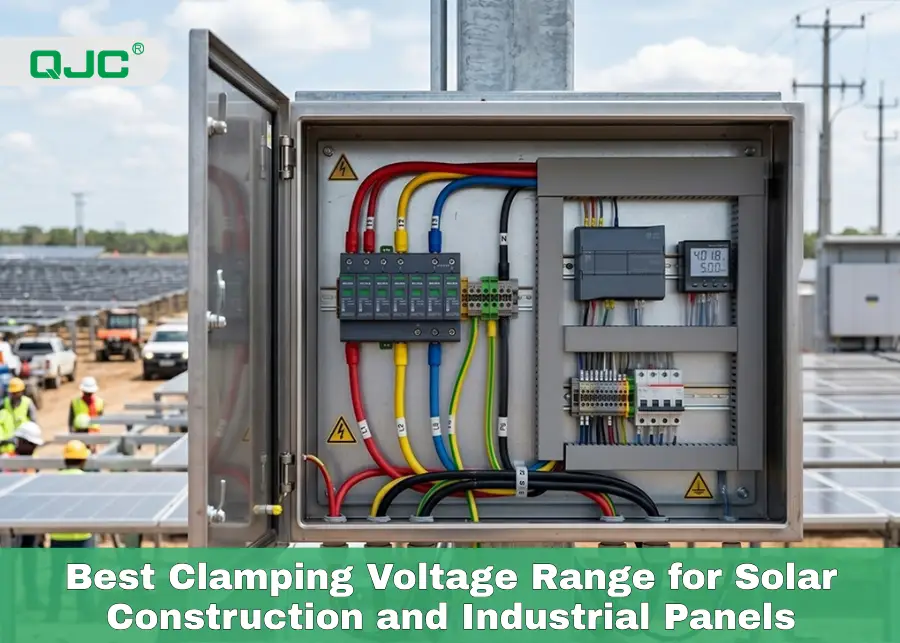
Best Clamping Voltage Range for Solar Construction and Industrial Panels:
The best range is not one fixed value; it must protect the load without reacting too close to normal voltage, as you’ll know from the points below:
- System Voltage: Match the SPD to the real AC supply or PV DC string voltage, not only the printed clamping value.
- PV DC Use: IEC 61643-31 applies to SPDs on the DC side of photovoltaic systems up to 1,500V DC.
- Protection Level: When asking what is clamping voltage on a surge protector, compare the let-through voltage with the withstand level of inverters, PLCs, drives, and meters.
- Low Clamping Choice: A low level helps sensitive equipment, but it must stay safely above normal operating voltage.
- VPR Check: UL 1449 Voltage Protection Rating (VPR) is determined using a 6 kV / 3 kA combination wave test, providing a fairer and more consistent SPD comparison.
Read More: Your Easy Guide to DC Surge Protective Device.
Does Clamping Voltage Change Over Time and How to Test It?
Yes, clamping behaviour can change over time, especially after repeated surges, heat, or temporary overvoltage, as you’ll know from the points below:
- Surge ageing: MOV-based SPDs can slowly weaken after many surge hits, especially in panels exposed to lightning or heavy switching loads.
- Heat effect: High cabinet temperature may stress the internal voltage clamping circuit and shorten service life.
- TOV risk: Temporary Overvoltage (TOV) can cause internal thermal stress and eventual damage to an SPD, even when there is no immediate visible burn mark on the outside.
- Visual check: Check the SPD status window during maintenance; red usually means replacement is needed.
- Remote alarm: In industrial panels, alarm contacts help detect failed SPDs before the next surge event.
Why QJC Is Best for AC and DC Surge Protectors?
QJC is a strong choice for AC and DC surge protection when the selection is made around real panel duty, not only the printed rating, as you’ll know from the points below:
- AC and DC use: QJC supports protection needs in low-voltage boards, solar PV panels, control cabinets, and distribution boxes.
- Proper coordination: An SPD works better when matched with breakers, fuses, earthing, cable length, and panel layout.
- Clamping check: Buyers asking what is clamping voltage on a surge protector need to compare let-through voltage, surge current, and system voltage together.
- Circuit behaviour: The voltage clamping circuit must suit the supply type, because AC and DC surge paths are not identical.
- Project supply: QJC covers SPD units and related low-voltage protection devices for complete board design.
Read More: Distribution Box (DB Box) : Complete Guide to Electrical Power Distribution and Protection.
Conclusion:
Choosing protection starts with understanding what is clamping voltage on a surge protector, because this value shows how much voltage may still reach your equipment during a surge. A good SPD should not be selected by price alone; it should suit the panel voltage, earthing condition, surge exposure, and AC or DC use. For contractors and panel builders, Qinjia MCB offers QJC surge protection options that can fit practical electrical projects where safety and steady supply matter.
Ready to secure your electrical panels with the right surge protectors? Reach out through our Contact Us page, chat with us on WhatsApp, or email sales@qinjia-mcb.com for expert project support and bulk pricing.
FAQs:
Is 400V clamping voltage good enough?
It may be fine on some 240V panels, but I would not judge it alone. Check the SPD rating, earthing, and what equipment is connected after the panel.
Does clamping voltage degrade over time?
Yes, it can happen. If the SPD takes many spikes or works for years inside a hot panel, its protection level may no longer stay the same.
What clamping voltage do I need for 240V systems?
For 240V, choose a value above normal supply voltage, but not so high that the surge still reaches the equipment with too much stress.

Leave a Reply